Resources for Communication Problems

Showing posts with label NC12. Show all posts

Wednesday, July 2, 2008

NC260-271 12T1-2宜蒨

NC260-271 12T1-2宜蒨

NC260~271 CH12Table

驗收者:9580025林宜蒨

NC263T12-1

9580038彭康政

圖片連結:T12-1

Cerebellar Lobes and Their Functions

小腦葉和它們的功能

Cerebellar Lobes and Their Functions

Cerebellar Lobes小腦葉

Functions功能

Archicerebellum (floccular nodular lobe)

Equilibrium 平衡

Paleocerebellum (anterior lobe)

Muscle tone, equilibrium, & body posture 肌肉張力、平衡、還有身體姿勢

Neocerebellum (posterior lobe)

Limb coordination 肢體協調

NC265T12-2

9580040黃宜嬅

圖片連結:T12-2

小腦的連結的上行和下行路徑。

小腦的表層是灰質、內部是白質。下行纖維束會陸續分支到各節段的灰質。白質內有上、下行傳導束。上行纖維束多數為脊髓內相同纖維束的延續;下行纖維束主要是大腦到脊髓和小腦的傳出纖維束。而且,上行路徑是傳遞感覺訊息,下行路徑是傳遞運動訊息。

參考資料:解剖學:神經系統

Monday, June 16, 2008

NC260-271FChapt.12馥榕

NC260-271FChapt.12馥榕

NC261F12-1筱柔

小腦的橫切面(A)與縱切面(B),以初級裂(primary fissure)分為前葉(anterior lobe)和後葉(posterior lobe);並以後外側裂(posterolateral fissure)分隔後葉與小葉結狀葉(flocculonodular lobe)。

按形態結構和進化可分為:絨球小結葉flocculonodular lobe(原小腦或古小腦),小腦前葉anterior lobe(舊小腦),小腦後葉posterior lobe(新小腦)

從外觀上看,小腦中間有一條縱貫上下的狹窄部分,捲曲如蟲,稱為蚓部vermis蚓部两侧有两个膨隆团块称为小脑半球。蚓部兩側有兩個膨隆團塊稱為小腦半球。在小脑蚓部和半球表面有一些横行的沟和裂,将小脑分成许多回、叶和小叶。在小腦蚓部和半球表面有一些橫行的溝和裂,將小腦分成許多回、葉和小葉。在这些横贯小脑表面的沟和裂中,后外侧裂和原裂是小脑分叶的依据。在這些橫貫小腦表面的溝和裂中,後外側裂和原裂是小腦分葉的依據。 后外侧裂将小脑分成绒球小结叶和小脑体两大部分,而原裂又将小脑体分成前叶和后叶。後外側裂將小腦分成絨球小結葉和小腦體兩大部分,而原裂又將小腦體分成前葉和後葉。这样,前叶、后叶和绒球小结叶便构成了小脑3个横向组成的分部。這樣,前葉、後葉和絨球小結葉便構成了小腦3個橫向組成的分部。 在小脑的分叶中,为了简化命名,拉塞尔提出罗马字的命名系统,他将小脑蚓部从前到后按次序分成10个小叶;对小叶的半球部分,则在代表各小叶的罗马字前冠以H,例如H即表示小脑第小叶的半球部分。在小腦的分葉中,為了簡化命名,拉塞爾提出羅馬字的命名系統,他將小腦蚓部從前到後按次序分成10個小葉;對小葉的半球部分,則在代表各小葉的羅馬字前冠以H,例如H即表示小腦第小葉的半球部分。

从发生学的观点来看,绒球小结叶出现最早,是小脑最古老的部分,被称为古小脑,它主要接受来自前庭核和前庭神经的传入纤维,调节躯干肌肉的活动,在维持肌紧张、身体平衡和姿势等方面起重要作用;前、后叶的蚓部及后叶蚓部的后外侧部出现得稍晚,称为旧小脑,其主要功能与头部和身体的本体感受和外感受的传入信息有关,有调节肌紧张的作用;小脑半球的大部分和部分蚓部发展得最晚,称为新小脑,它在人类最为发达,主要接受经脑桥接转的来自大脑皮质的纤维,参与由大脑皮层发起的随意运动的调节。從發生學的觀點來看,絨球小結葉出現最早,是小腦最古老的部分,被稱為古小腦,它主要接受來自前庭核和前庭神經的傳入纖維,調節軀幹肌肉的活動,在維持肌緊張、身體平衡和姿勢等方面起重要作用;前、後葉的蚓部及後葉蚓部的後外側部出現得稍晚,稱為舊小腦,其主要功能與頭部和身體的本體感受和外感受的傳入信息有關,有調節肌緊張的作用;小腦半球的大部分和部分蚓部發展得最晚,稱為新小腦,它在人類最為發達,主要接受經腦橋接轉的來自大腦皮質的纖維,參與由大腦皮層發起的隨意運動的調節。 在位相性的活动和肌肉的协调运动过程中起重要作用。在位相性的活動和肌肉的協調運動過程中起重要作用

-st95相簿

NC262F12-2婷婷

A. A section of the pontine tegmentum and cerebellum showing the deep cerebellar nuclei:dentate, emboliform, fastigial, and globose.

橋腦蓋和後腦的部分顯示出深刻的小腦核

B. An anatomical illustration of a dissected dentate nucleus with a portion of the cerebellum.

一個齒狀核伴隨著小腦一部分的解剖說明

橋腦是哺乳動物腦的一部分,位於延腦上方,及小腦與第四腦室下方。為連接延腦與小腦的寬馬蹄形橫走神經纖維團,亦為在顏面區與腦間傳遞感覺訊息與運動神經衝動的第四對腦神經之始點或終點,並為連接腦皮質與小腦的神經纖維通路。橋腦為大腦-小腦徑的延遲站並和延髓共同調節呼吸速率;延髓則含有一些調節心跳、呼吸和血壓的生命中樞,以及嘔吐、咳嗽、吞嚥的反射。

圖片

NC263F12-3郁文

小腦皮質

小腦表面有許多平行的橫溝,把小腦分隔成許多小葉片。每一葉片表面是一層灰質,即小腦皮質,皮質下為白質(髓質)。小腦皮質從外到內明顯地分3層(圖733)。皮質內的神經元有星形細胞、籃狀細胞、蒲肯野細胞(Purkinje cell或稱梨狀細胞)、顆粒細胞和高爾基細胞(Golgi cell5種(圖734)。

1.分子層此層較厚,神經元較少,主要有兩種。一種是小型多突的星形細胞,軸突較短,分布于淺層。另一種是籃狀細胞,胞體較大,分布于深層,其軸突較長,與小腦葉片長軸成直角方向並平行于小腦表面走行,沿途發出許多側支,其末端呈籃狀分支包繞蒲肯野細胞的胞體並與之形成突觸。

  2.蒲肯野細胞層由一層蒲肯野細胞胞體組成。此種細胞是小腦皮質中最大的神經元,胞體呈梨形,從頂端發出23條粗的主樹突伸向分子層,樹突的分支繁多,形如側柏葉狀或扇形,鋪展在與小腦葉片長軸垂直的平面上。軸突自胞體底部發出,離開皮質進入髓質,終止于小腦內部的核群。

  3.顆粒層 此層由密集的顆粒細胞和一些高爾基細胞組成。顆細胞很小,胞體直徑與淋巴細胞近似,有45個短樹突,樹突末端分支如爪狀。軸突上行進入分子層呈“T”形分支,與小腦葉片長軸平行,稱平行纖維(parallel fiber)。平行纖維穿過一排排蒲肯野細胞的扇形樹突,與其樹突棘形成突觸(圖735)。一條平行纖維可與400多個蒲肯野細胞建立突觸,每個蒲肯野細胞與一條平行纖維之間只有一個突觸連接;但一個蒲肯野細胞的扇形樹突有20萬~30萬條平行纖維通過,故一個蒲肯野細胞的樹突上共有20萬~30萬個突觸。高爾基細胞的胞體較大,樹突分支較多,大部分伸入分子層與平行纖維接觸,軸突在顆粒層內呈叢密分支,與顆粒細胞的樹突形成突觸。

資料來源: 神經節、脊髓、大腦皮質和小腦皮質的結構

http://big5.51daifu.com/medical_books/2007/0307/F4ED59B02961ED3FH126949.shtml

圖片

NC264F12-4穎萱

傳出和傳入小腦主要是透過下、中、下小腦腳來傳輸。橄欖小腦神經纖維透過中小腦腳從腦幹和脊椎傳達到小腦,透過中小腦腳的大腦皮質與橋腦間和橋腦與小腦間的神經纖維構成了主要的小腦傳入系統。在上傳到對側動作皮質和下傳到腦幹網狀核與脊椎時,上小腦腳的輸出神經纖維在中腦的地方交叉。

相關網頁:WIKI - Cerebral Peduncle

圖片

NC266F12-5宏舜

神經訊息經脊髓到大腦皮質一定要經過腦幹和間腦,簡單來說,間腦的功能是訊息整合器,整合所有通往大腦的訊息(嗅覺除外)。故來自脊髓的所有體感覺以及顏面感覺、視覺、聽覺、味覺等訊息皆須經由間腦的整合後,才能傳給大腦判讀。

來自脊髓的體感覺---包括負責傳遞痛覺、溫覺、壓覺的前外側系統(anteriorlateral system)與負責傳遞精細觸覺與震動覺的背柱(dorsal column),其神經傳遞路徑是:

感覺接受器脊髓腦幹間腦大腦。
至於顏面的體感覺---主要是由三叉神經負責,當然就不會經過脊髓了,其神經傳導路徑為:
感覺接受器腦幹的三叉神經核間腦大腦。
而視覺,傳導路徑不會經過腦幹。其傳導路徑是:
視網膜經視徑(optic tract)抵達間腦大腦皮質。
而嗅覺,不但不會經過腦幹,也不會經過間腦。傳導路徑為:
嗅神經經嗅徑(olfactory tract)直接抵達大腦。

圖片

NC267F12-6佳吟

A圖是指小腦的功能單位。B圖主要說明小腦的運動神經運作的原則

圖片

Sunday, March 9, 2008

NC260-271O Chapt.12

NC260-271O Chapt.12穎萱

Chapter 12 Motor system 2: Cerebellum

LEARNING OBJECTIVES

INNERVATION PATTERN

CEREBELLAR ANATOMY

Figure 12-1

Figure 12-2

Figure 12-3

Transverse and Longitudinal Cerebellar Regions

Table 12-1

Cerebellar Connections

Afferent Pathways

Efferent Pathways

Motor Nuclei of Brainstem and Spinal Cord
Motor Cortex
Reticular Formation
Vestibular Nuclear Complex

Figure 12-4

Table 12-2

CEREBELLAR CORTEX

Structure

Figure 12-5

Neuronal circuitry of a Cerebellar Functional Unit

Figure 12-6

MOTOR LEARNING

CLINICAL CONCERNS

Signs of Cerebellar Dysfunction

Ataxia

Dysdiadochokinesia

Dysarthria

Dysmetria

Intention Tremor

Hypotonia

Rebounding

Disequilibrium

Cerebellar Pathologies

Cerebrovascullar Accident

Toxicity

Progressive Cerebellar Degeneration

CLINICAL CONSIDERATIONS

PATIENT ONE

PATIENT TWO

PATIENT THREE

SUMMARY

QUIZ QUESTIONS

TECHNICAL TERMS

Tuesday, March 4, 2008

NC271S12

NC271S12

Chapter 12 Motor System 2: Cerebellum

Summary

The cerebellum does not initiate motor movements, nor does it alter sensation. It functions as a servomechanism, constantly monitoring all body motor activities and comparing intended movements (planned by the motor and premotor cortex) against the updated sensory information it receives. By calculating discrepancies between sensory and motor states, it regulates the quality of motor movements generated elsewhere in the motor cortex, brainstem, or spinal cord. With its ability to make alterations for greater precision and smoothness during ongoing movement, the cerebellum contributes to muscle synergy, tone, and equilibrium. Signs of cerebellar dysfunction include paresis, hypotonia, ataxia, asymmetry, intention tremor, dysdiadochokinesia, dysarthria, and disequilibrium. Patients with cerebellar pathology lack the ability to control and regulate motor functions. Small lesions of the cerebellar cortex may cause minimal impairments that can be compensated for. However, massive cerebellar damage involving the deep nuclei or superior cerebellar peduncle can cause permanent and lasting deficits unless it occurs at a very young age. Cerebellar impairments do not affect reasoning, thinking, memory, or the comprehension of language.

Thursday, February 21, 2008

NC271TT Chapt.12

NC271TT Chapt.12

Mark who did which!

For each entry, find Chinese translation of the term, check etymology, find relevant websites, pictures, animations, or video on the web, if available

12TT

NC271TT01 archicerebellum

You are explaining anatomy, not archicerebellum

解剖學,是涉及生命體的結構和組織的生物學分支學科;可以分為動物解剖學植物解剖學。解剖學的主要分支是比較解剖學組織學人體解剖學。在解剖學研究中,研究大體器官常利用剖割的方法;組織細胞、胞器的觀察則會利用顯微鏡

NC271TT02 asthenia

肌肉衰弱無力,小腦的官能不良導致肌肉衰弱無力。

NC271TT03 asynergia

協同不能

NC271TT04 ataxia

Wobbliness. Incoordination and unsteadiness due to the brain's failure to regulate the body's posture and regulate the strength and direction of limb movements. Ataxia is usually a consequence of disease in the brain, specifically in the cerebellum which lies beneath the back part of the cerebrum.

運動失調,此字源自希臘文(ataxis)意為【無秩序】或【不協調】,有時【運動失調】是用來描述由於中樞神經系統受到感染,外傷或退化性疾病的影響而產生的症狀。分為遺傳性和散發性兩種。

NC271TT05 climbing fibers

攀緣纖維

圖片 http://probes.invitrogen.com/handbook/images/g001266.gif

原始網站:http://probes.invitrogen.com/handbook/figures/0662.html

NC271TT06 deep cerebellar nuclei

深奧的小腦核心-在小腦記憶中內部的骨髓腔區包含齒狀的、栓的形狀、球形和核的最高處。

NC271TT07 dysdiadochokinesia

在治療階段時不能作出迅速的運動而且不能修正運動。

NC271TT08dysarthria

發音不良、發音困難(由神經肌肉障礙所致).

是由於中樞神經系統而造成的發音困難。一個人健康出了問題,聲音亦亮不起來,甚至因發音困難而引起擠壓喉嚨的情形,這樣子很容易導致呼吸系統和共鳴器官發生病變。

Etymology: New Latin, from dys- + arthr- + -ia

Meaning: difficulty in articulating words due to disease of the central nervous system.Dysarthria is a motor speech disorder resulting from neurological injury, characterised by poor articulation (cf aphasia: disorder of the content of speech). Any of the speech subsystems (respiration, phonation, resonance, prosody, articulation and movements of jaw and tongue) can be affected.

Disarthic speech is due to some disorder in the nervous system, which in turn hinders control over, for example, tongue, throat, lips or lungs. Swallowing problems, dysphagia, are often present.

Cranial nerves that control these muscles include the facial nerve (VII), the glossopharyngeal nerve (IX), the vagus nerve (X), and the hypoglossal nerve (XII).

Classification

Dysarthrias are classified in multiple ways based on the presentation of symptoms. Specific dysarthrias include spastic, flaccid, ataxic, unilateral upper motor neuron, and mixed dysarthria.

Causes

The reasons behind dysarthria can be many; among the diseases are stroke, ALS, Parkinson's disease, botulism, cranial nerve lesions, chorea, prion protein related diseases, and cerebral palsy. Dysarthria can also be an early symptom of stroke, and of other forms of traumatic brain injury. More common causes are intoxication and anesthesia, although these are transient. Another possibility is myasthenia gravis.

Treatment

The articulation problems that dysarthria causes can be treated together with a speech language pathologist using a range of techniques which sometimes includes strengthening the speech musculature. Augmentative and Alternative Communication (AAC) devices that make coping with dysarthria easier include speech synthesis software and text-based telephones.

相關影片:

Improve dysarthria with speech therapy on video

http://tw.youtube.com/watch?v=54eRRbCtPn8

Spactic dysarthria

http://tw.youtube.com/watch?v=EHNSBo3SsmY

References

http://en.wikipedia.org/wiki/Dysarthria

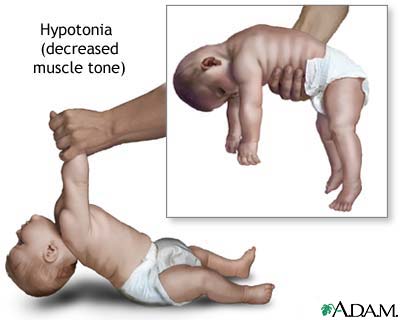
中文解釋:張力減退(1.壓力過低.2.動脈管弛緩.3.肌張力過弱.

英文解釋:(of muscular tissue) the state of being hypotonic

(肌組織)狀態低壓

張力減退/張力過弱. 張力減退是指肌肉張力減退, 通常出現於新生嬰兒,可暗示中央系統機能障礙,基因或肌肉紊亂。

圖片位址:http://www.nlm.nih.gov/medlineplus/ency/images/ency/fullsize/17229.jpg

相關網站:http://www.nlm.nih.gov/medlineplus/ency/imagepages/17229.htm

NC271TT09 dysdiadochokinesia

Main Entry: dys·di·ad·o·cho·ki·ne·sia連續更替運動之能力失常

Variant: or dys·di·ad·o·ko·ki·ne·sia

Function: noun

Dys 失去+diadochokinesia《名》 連續更替運動之能力,(兩種反方向運動之連續變換,例如手掌向上向下之轉換).

Definition: impairment of the ability to make movements exhibiting a rapid change of motion that is caused by cerebellar dysfunction —compare ADIADOKOKINESIS

adiadochokinesia (adi•a•do•cho•ki•ne•sia) [a1diadochokinesia] a dyskinesia<> 運動困難,運動不良consisting of inability to perform the rapid alternating movements of diadochokinesia. Called also adiadochocinesia, adiadochokinesis, and adiadokokinesia

NC271TT10 hypotonia

動脈管弛緩

Hypotonia is a condition of abnormally low muscle tone (the amount of tension or resistance to movement in a muscle), often involving reduced muscle strength. Hypotonia is not a specific medical disorder, but a potential manifestation of many different diseases and disorders that affect motor nerve control by the brain or muscle strength. Recognizing hypotonia, even in early infancy, is usually relatively straightforward, but diagnosing the underlying cause can be difficult and often unsuccessful. The long-term effects of hypotonia on a child's development and later life depend primarily on the severity of the muscle weakness and the nature of the cause. Some disorders have a specific treatment but the principal treatment for most hypotonia of idiopathic or neurologic cause is physical therapy to help the person compensate for the neuromuscular disability.

NC271TT11 intention tremor

中文意義:顫抖癒合之過程.

術語原意:A tremor which arises or which is intensified when a voluntary, coordinated movement is attempted.

圖片:

NC271TT12 mossy fibers

苔狀神經,定義:軸突提供投入到小腦從其他部分的大腦。 They provide direct connections with both golgi and granule cells in the granular layer.他們提供直接的聯繫,無論golgi與顆粒細胞中的顆粒層。 The axons originate in the pons and spinocerebellar pathways.軸突起源於橋腦和脊髓通路。 Each has 3 to 5 synapses with granule cell dendrites.35個突觸與顆粒細胞的樹突。

NC271TT13 neocerebellum

新小腦,(小腦半球兩側部分,主要接受經橋腦來的輸入訊息).

NC271TT14 paleocerebellum

Paleocerebellum舊小腦,(palaeocerebellum).

a phylogenetically old part of the cerebellum concerned with maintenance of normal postural relationships and made up chiefly of the anterior lobe of the vermis and of the pyramid

前葉anterior lobe 位於小腦上部原裂以前的部分,加上小腦下面的蚓垂和蚓錘體。在種系發生上晚於絨球小結葉,稱為舊小腦paleocerebellum

NC271TT15 Purkinje cells

Purkinje cells柏金氏細胞

小腦皮質內的一種大型細胞,掌控著肌肉運動及平衡。

NC271TT16 rebounding

彈回,跳回

參考網站:http://tw.dictionary.yahoo.com/

Tuesday, January 8, 2008

NC260L Chapt.12

NC260L Chapt.12

Motor System 2: Cerebellum

12

NC260L01:Describe the importance of the cerebellum in motor activity

___小腦運動神經活動重要性

P260~261Fig.12-4

NC260L02: Outline the major anatomic structures of the cerebellum.

勾勒出小腦主要的解剖構造

這個學習目標是要我們在上完這一章後可以勾勒出小腦主要的解剖構造,261頁到263頁是有關小腦解剖結構的一些介紹

小腦位於大腦半球後方,覆蓋在腦橋及延髓之上,橫跨在中腦和延髓之間。 它由胚胎早期的菱脑分化而来,是脑六个组成部分中仅次于大脑的第二大结构。它由胚胎早期的菱腦分化而來,是腦六個組成部分中僅次於大腦的第二大結構。小腦傳遞並協調由大腦皮質出來要控制隨意肌運動(譬如到手腳)的訊息。小腦另有一重要功能為維持平衡與姿勢。

NC260L03:Describe the function of each principal cerebellar structure

描述每一個小腦主要構造的功能

P266~268 Figure12-6A.B

NC260L04 :List cerebellar afferent and efferent projections and discuss their functions.

列出小腦的傳出和傳入反射並探討其功能

可參考NC265T12-2

NC260L05:Describe the neuronal circuitry of a cerebellar functional unit.

描述一種小腦功能單位的神經細胞的路。

描述小腦功能單位的神經迴路。

課本內容:266~268

NC260L06:Discuss the major symptoms of cerebellar dysfunction

談論小腦的官能不良主要症狀

ataxia運動失調;共濟失調,(肌肉)

dysdiadochokinesia輪替運動錯亂

dysarthria發音不良,發音困難,(由神經肌肉障礙所致)

dysmetria動幅障礙,(無法認定方向與限制行動)

intention tremor癒合性顫抖

hypotonia 1.壓力過低 2.動脈管弛緩 3.肌張力過弱

rebounding回躍現象 回彈反射

disequilibrium不平衡,不平衡之狀況

課本p269p270

NC260L07Outline diseases and pathologies of the cerebellum.

概述小腦 疾病和病理

課本269 271